BLOGGER TEMPLATES AND TWITTER BACKGROUNDS

Monday, October 26, 2009

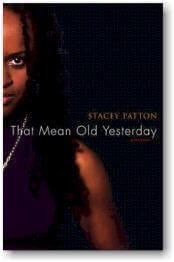
That Mean Old Yesterday


Stacey Patton was a ward of the State of New Jersey since she was a baby.  At the age of five, Stacey was removed from the foster care system and adopted by a middle-class African-American couple from suburban Trenton.  Appearing to be the perfect guardians for Stacey, Myrtle and G welcomed her with love and open arms; but little did she know that her young life would soon be one of fear, abuse, and survival. In her failed attempt to murder her adoptive parents, Stacey came full circle with life and realized the full worth of her existence.  That Mean Old Yesterday is an exceptional story of a young Black girl's fight to find answers about her womanhood, culture, and purpose in life. 


I found this book highly invigorating; it is definitely a page turner from the very beginning. It is extremely informative about the secrets, lies, abuse, and processes that occur within child welfare systems and educating regarding African American slavery and its repercussions that many in the Black community still possess. 
---b-flat bella


(Below is a synopsis of the book...if you want to know what happens, continue reading...if not, GET THE BOOK!!)
Educated in Catholic schools and reared in the Holiness Church by her tyrant of a mother, Myrtle and her docile father, George. Stacey was considered one of the lucky ones to have left foster care and be adopted.  Myrtle and George were Southern people and George was a part-time minister.  They believed that children were meant to be seen and not heard and if Stacey crossed the line, she was severely punished.  Although she was a good student she never could please her adoptive mother.  Myrtle was Stacey’s Master and she walked on eggshells every day of her life in that house of fear.  The nuns at the Catholic school ignored her bruises and “accidents.” They also ignored the sadness in her eyes and the fear that set her apart from the other children.   
One day when she had more than she could take, Stacey ran away from home.  After twelve years of waiting for someone, anyone, to come save her, Stacey bolted and walked out of that Myrtle’s  house with freedom on her mind.
The author uses the experience of slavery to compare her life to while in Myrtle and George’s care.  So the book becomes more than just a memoir, it becomes  also a lesson in African American history and the story of people of color as slaves in America.  Patton believes that when African Americans whip their children they do not understand the historical roots of the practice and itsnegative impact on African American children’s development.
Finally, finding a safe haven at the police station; her abuse became apparent to the police officers and the state welfare system.   She was given a choice to either return to her abusive adoptive parents or to become a ward of the state again and be placed in a group home.  Patton choose the group home.  The restoration of her life began to take place based on her indomitable spirit and her refusal to give up.  She turned the tables on the system and earned a full scholarship to a prestigious private prep school.   She was determined to be prepared to enter an Ivy League college upon graduation. Despite being discouraged by the staff at the group home and her therapist; Stacey pushed on and continued to be a gifted student excelling in both academics and athletics.  Stacey Patton focused on healing, forgiveness and forging an identity of her own.  
What she has written in That Mean Old Yesterday is a story rife of life’s disappointments of tragic proportions; yet she emerges triumphant.  She wins her fight to become whole.  Now a Ph.D. candidate at Rutgers University and an award winning journalist, Stacey’s story is told in an effort to encourage us to carefully consider our treatment of our children and our history as slaves in America.   This book will open your eyes to the realities of child abuse in even the most prestigious African American communities. -- Idrissa Uqdah


Watch Stacey Patton read an except from That Mean Old Yesterday


Thursday, October 15, 2009

African-American Coloratura Sopranos of the 21st Century


Originally posted on October 15, 2009
Edited on May 24, 2011 


AS an aspiring opera/classical singer, I have always looked up to & tried to learn the from the successful singers in my fach. I also believe that it is important to have a role model who I can relate to on multiple levels...specifically, someone of the same ethnicity. Don't get me wrong, studying, learning from, and listening to a singer of a different ethnic background is something I do on a daily basis, but it is also nice to have a form of reference that is common other than just the voice.

THIS brings me to a few questions...plain & simple: Where are the accomplished & acclaimed African-American soubrette & coloratura sopranos of the 21st century? Are there any out there?  Where are the Mattiwilda Dobbs', Kathleen Battle's, Reri Grist's, Gwen Bradley's, Harolyn Blackwell's and Barbara Hendricks'? Honestly, in my years of studying voice, singing in competitions, doing summer programs, attending masterclasses, I can count on ONE hand the number of African-American sopranos I've met with my voice type, and it makes me a little sad. I haven't been in the industry THAT long, but I've come to the conclusion that we are rare. Until I am proven wrong, I will stand by this. OR, maybe I'm not doing enough research...

I know that every voice is unique, blah blah, but I wonder what's really up? Am I just imagining this whole thing? Does this open up the floor for discussion about voice teachers and whether or not they are cultivating voices accurately? Is it a political issue in the opera business? Is this a matter of the era in which we live now, where so much is based on academia? Is it a perception of work ethic?I have no idea. Someone please help me figure this out, if there's anything to figure out at all. Where and who are the African-American coloraturas, of notable mention, of this generation?
ALSO, as a young voice teacher, I am even more eager to further my understanding of this great art form to now include my students' development.  I love that I can rely on those great singers who have contributed significantly to Black opera and classical music history. However, my inquiry still remains as my concern grows for the continuance of this particular fach and our race in the Western classical music culture. 
(If you haven't noticed, I'm very passionate about this subject & it took a lot of self-convincing to write this.)
 ON a slightly different note, below are some video clips of my favorite African-American sopranos (also mentioned above) with whom I share similar vocal qualities. Enjoy!!
 

==================================================

RERI GRIST
Zerbinetta's aria from Ariadne auf Naxos (R. Strauss) 


BARBARA HENDRICKS
Signore ascolta from Turandot 


MATTIWILDA DOBBS

Songs by Debussy, Milhaud, Strauss, & Rodrigo


KATHLEEN BATTLE
O luce di quest'anima from Linda di Chamounix (Donizetti) 


HAROLYN BLACKWELL
Somewhere from West Side Story 

Monday, October 5, 2009

Les Chansons de Bilitis: An Investigation of the Erotic as seen in Debussy’s Setting

(This essay has been submitted to turnitin.com, do not plagiarize)  

Les Chansons de Bilitis:
      An Investigation of the Erotic as seen in Debussy’s Setting
Text by Pierre Louÿs


The word erotic does not rest quietly on the page. It is a word that tempts and eludes us. It hides behind its dictionary definition – ‘of, devoted to or tending to arouse sexual desire' – which cannot begin to touch the numerous spheres that it encompasses. For this term is heavily laden with ideological baggage. It darts through our minds, drawing out questions; we want details. And always there is a tinge of excitement as we tread into a secret, forbidden land. Eroticism mingles with anticipation and imagination; it dangles possibilities before us. Eroticism's association with sex carries with it Parisian society's ambivalent attitude towards sex at the end of the nineteenth century.
      Crime and decadence were on the rise and society was perceived to be at an all-time moral low. As more and more people patronized commercial entertainments, fears of degeneracy, laziness, immorality and hedonism began to surface. Many identified the Republic and its advocacy of liberty as the source of the problem: 'To conservative moralists, the Republic was unleashing unprecedented license: divorce, pornography, alcoholism, nudity on stage, egoism, all seen as ever worsening symptoms of sickness and decline.' Together these elements generated a sense of social disorder and panic. It became clear that the cultivation of the family was the only path towards the survival of the nation. Thus women were expected to be wives, and wives were expected to be domestic, sexless and selfless. 'Maternity defined the essence of womanhood' and male sexual fantasies were saved for the brothel. But prostitutes were classic degenerates, even running the risk of becoming lesbians; they therefore represented 'a terrible threat to the sexual order'. Men had an irresistible pull toward prostitutes and subsequent remorse, and the interplay between fear and male desire ordered in a broader way many other aspects of the history of sexuality in the second half of the nineteenth century. (Trezise, 117)


      Within Claude Debussy’s compositions, links to symbolism and eroticism emerge not only from the texts but from the music itself.  For example, the symbolists’ interest in experimentation with the pure sounds of words finds a parallel in Debussy’s compositional techniques, such as chord streams and the use of non-diatonic scales. Additionally, Debussy’s music and Pierre Louÿs symbolist poetry convey a sense of uncertainty. Likewise, Debussy’s music often abandons traditional structure in its form, harmony, timbre, and rhythmic organization, creating a musical style that displays a subtlety corresponding to that of symbolist poetry.
      The initial step toward understanding Debussy’s setting of Les Chansons de Bilitis is an investigation of the texts by Pierre Louÿs. A discussion of the history between Debussy and Louÿs and Debussy’s ability to perfectly merge textual and musical concepts, with specific attention to the mindset and techniques of Louÿs, provides the background for this analysis. 

.......
Read entire essay here
     

Monday, September 28, 2009

Private Practice Season 4!!! It's almost time!!!


Ladies & Gents...it's almost time!!!


I cannot WAIT until October 1, 2009 at 10 PM EST.  Private Practice, one of the most anticipated drama series on ABC will premiere its 3rd season this Thursday. This star-studded cast includes Kate Walsh (formerly on Grey's Anatomy), four-time Tony winner Audra McDonald, Taye Diggs, Amy Brennemen, Tim Daly, Paul Adelstein, KaDee Strickland, and Chris Lowell. Commonly labeled the "Grey's Anatomy spin-off", Private Practice had serious shoes to fill in its debut season. With Grey's fanatics losing their minds knowing that their beloved Addison (K.Walsh) was leaving the show for some private practice show AND the writer's strike that cut Season 1 extremely short, Private Practice's fate was very unsure.


Nonetheless,we made it! (I say "we" because I totally immerse myself in the series such that I think I'm on set with them in the studio, lol) Shonda Rhimes was wrong (in a good way) for ending Season 3 the way it did & leaving us hanging for all these months. There are just sooo many questions that need to be answered ASAP!! Who is Violet's baby's father? Does Violet survive the attack by the psycho patient? Is the baby ok? Will Naomi & Sam rekindle their flame AGAIN? Will Naomi give Dell a chance? What's up with Charlotte & Cooper? 


Like I said...sooo many questions need to be answered, but I know it'll happen over the course of the entire season.


Just in case you are dying of suspense & NEED to know a little more detailed info about the season opener, check out some fun stuff below!!!


If you're behind, then catch up here!


Radio show: The ladies of the cast talk about Season 3


Who is Addison's new love interest?


Episode 1 - Sneak Peak


Ok, this should be enough for now. I hope you will this upcoming season of Private Practice. I certainly plan on it.


Later!!